
The Other Side of Emptiness - Translated by Geshe Michael Roach with Gibson Chang - Paperback - PREORDER AVAILABLE OCTOBER 30TH
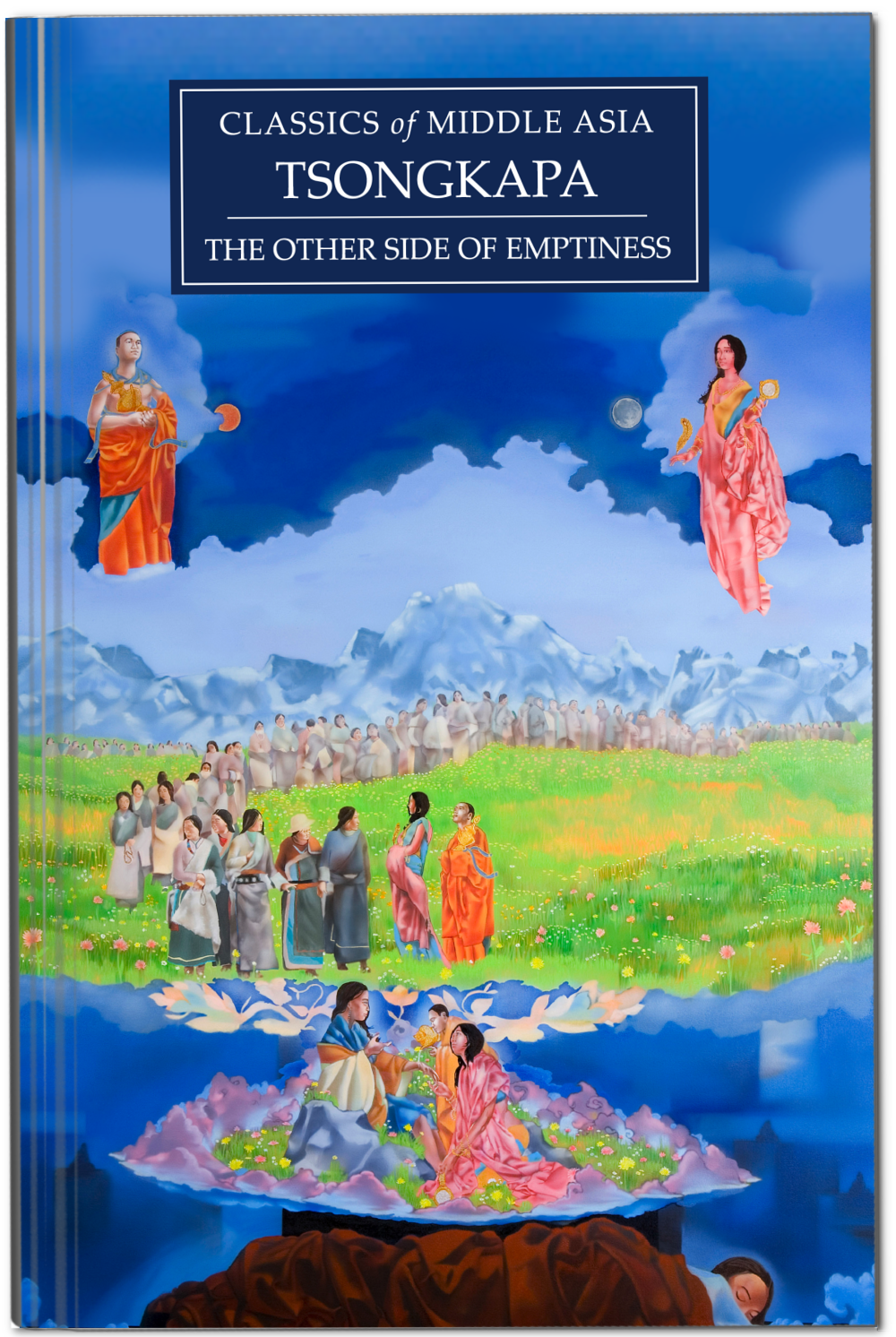
The Other Side of Emptiness - Translated by Geshe Michael Roach with Gibson Chang - Paperback - PREORDER AVAILABLE OCTOBER 30TH
Translated by Geshe Michael Roach with Gibson Chang
A Commentary on Je Tsongkapa’s “Praise of Dependent Events”
According to the traditional teachings of Buddhism, the most important thing we can accomplish in our entire life is to see emptiness directly.
The emptiness that we see is not some kind of strange black realm. Rather, it is the simple fact that there is nothing in the whole world which does not come to us from how we have treated other people around us.
When we do something good or bad to any person, it plants a tiny seed in our mind. When that seed flowers, things that are good or bad happen in our life. Our whole life happens that way.
This means that—if we could just understand how all this seed planting really works—we could have a completely happy life. In theory, we could even overcome death itself.
The fact that nothing in our life doesn’t come from these seeds is what we call “emptiness.” The ancient books of wisdom say that if we could just meet up with this emptiness directly during a good meditation session, this would catapult us to all our goals.
Perhaps the greatest teacher of emptiness in history was the Tibetan lama named Je Tsongkapa (1357-1419). He held the opinion that the surest path to emptiness was a precise understanding of how those mental seeds work.
The book you see here is a famous explanation that Tsongkapa gave of that very subject, in the form of a song of praise to the Buddha for teaching about mental seeds. It comes with an equally famous explanation of the song by the great Tibetan thinker Lama Quicksilver, who lived 1772-1851. The text has been translated by Gibson Chang and Geshe Michael Roach.
Important Notice: This material cannot be shipped to countries where its distribution or importation is prohibited by law.